
Last Updated: March 28, 2026 (On this date, XAG/USD trades ~$73)
TL;DR: Silver (XAG/USD) perpetuals are now live on Ostium. How to trade: Connect a wallet at app.ostium.com → deposit USDC → search XAG/USD → go long or short with up to 100x leverage. This article covers silver's legendary trading history — from the Hunt Brothers' squeeze to Buffett's billion-dollar bet — and explains how to trade silver on-chain 24/7 without a broker.
By popular request, we've just listed silver on Mainnet. To mark this occasion, let's take a journey through some of the most fascinating chapters in silver's trading history.

Silver has long been the rebellious cousin in the precious metals family. More abundant than gold, yet scarce enough to be valuable; critical for industry, yet cherished as a store of wealth. This duality has made silver a playground for traders, investors, and even the occasional would-be market manipulator.
From brazen attempts to corner the market to quiet accumulation by legendary investors, silver's past is peppered with high-stakes drama and valuable lessons. As we open the doors to silver trading, understanding these historical episodes can provide crucial context for today's traders. Let's dive into some of the most captivating silver sagas, starting with the infamous Hunt brothers' audacious play in the late 1970s...
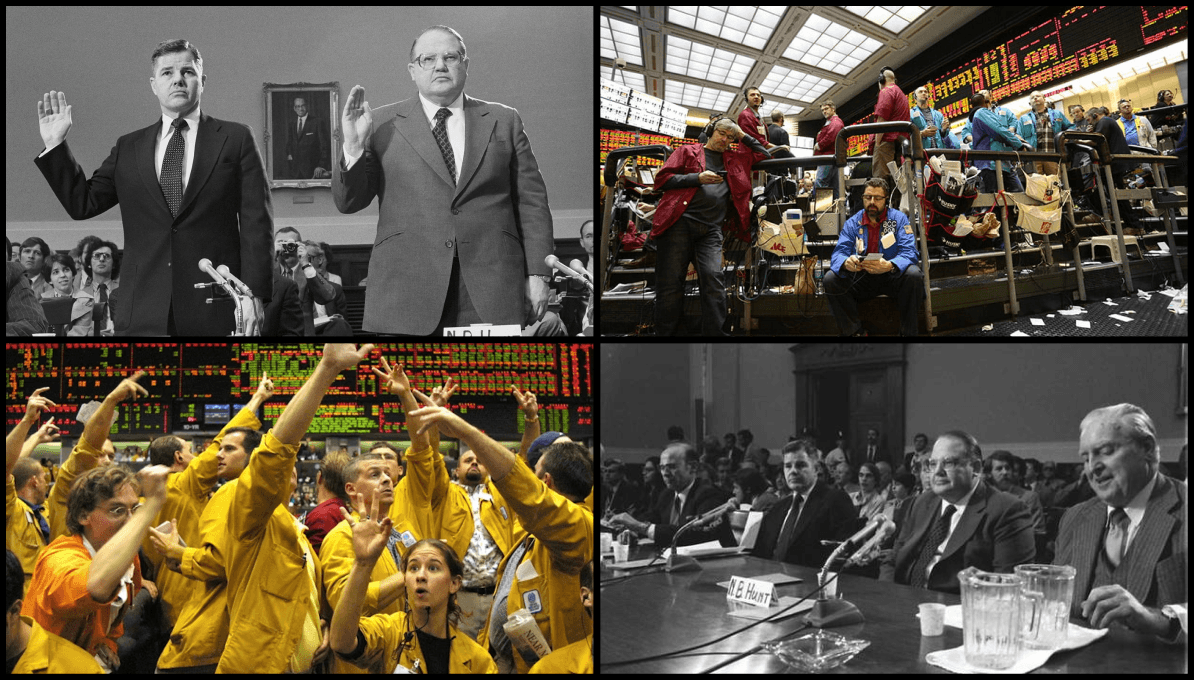
What Happened During the Hunt Brothers' Silver Squeeze (1979-1980)?
In the late 1970s, Nelson Bunker Hunt and William Herbert Hunt, sons of oil tycoon H.L. Hunt, decided to hedge against inflation by buying silver. And by buy, we mean stockpile.
By 1979, the Hunts had accumulated an estimated 100 million ounces of physical silver and futures contracts for millions more. Their buying spree drove the price from about $6 per ounce in early 1979 to nearly $50 by January 1980.
The key to their strategy was leverage. The Hunts used their oil wealth as collateral to borrow heavily, allowing them to control far more silver than they could have bought outright. They also took physical delivery of silver instead of cash settlements, further tightening the market.
The COMEX (Commodity Exchange) and the Federal Reserve eventually stepped in. On January 7, 1980, the COMEX introduced "Silver Rule 7," which placed severe restrictions on leveraged commodity purchases. Simultaneously, the Fed hiked interest rates to combat inflation, making the Hunts' borrowing costs skyrocket.
The coup de grâce came on March 27, 1980 – "Silver Thursday." The Hunts couldn't meet a $100 million margin call. Silver prices collapsed, plummeting from $21.62 to $10.80 per ounce in a single day. The Hunts lost over a billion dollars, declared bankruptcy, and faced civil charges for attempting to corner the market. They were fined $10 million each and banned from trading commodities.
How did Saudi Investors and the Iranian Revolution Amplify the Silver Crisis?
The Hunt brothers' silver play didn't occur in a vacuum. The late 1970s were a time of significant geopolitical turmoil, particularly in the Middle East, which had major implications for the global economy and the silver market.
The Hunt brothers weren't operating alone. They had formed alliances with wealthy Saudi investors, including members of the Saudi royal family. These partnerships were crucial for two reasons:
1. Additional capital: The Saudi investors provided extra funds to help the Hunts continue their silver buying spree.
2. Oil as collateral: The Saudis were able to use their vast oil reserves as collateral for loans, which were then used to purchase more silver. This oil-backed leverage added significant firepower to the silver-buying consortium.
The involvement of Saudi money in the silver market was particularly concerning to U.S. regulators, who were still reeling from the effects of the 1973-74 oil embargo.
Iranian Revolution and the Fall of the Shah
The Iranian Revolution of 1978-79 also played a significant role in the broader context of the Hunt brothers' silver play:
1. Oil price spike: The revolution led to a disruption in Iranian oil production, causing global oil prices to more than double between 1978 and 1979. This spike in oil prices fueled inflation fears, making precious metals like silver more attractive as a hedge.
2. Geopolitical instability: The fall of the Shah, a key U.S. ally in the region, created a sense of instability in the Middle East. This uncertainty further drove investors towards safe-haven assets like silver.
3. Petrodollar recycling: With oil prices soaring, oil-producing countries like Saudi Arabia had even more dollars to invest. Some of this money found its way into the silver market through partnerships with the Hunts.
The combination of these factors – Saudi involvement, oil wealth as leverage, and the geopolitical instability caused by the Iranian Revolution – created a perfect storm that amplified the Hunt brothers' impact on the silver market. It also explains why U.S. regulators were particularly sensitive to the situation, seeing it not just as a case of market manipulation, but as a potential threat to economic and national security.When the silver bubble finally burst, it wasn't just the Hunt brothers who were affected. The fallout rippled through their Saudi partners and highlighted the interconnectedness of oil wealth, geopolitics, and global commodity markets.
How Much Silver did Warren Buffet Buy and Why (1997-2006)?
Fast forward to 1997. Warren Buffett, through Berkshire Hathaway, quietly amassed 129.7 million ounces of silver – worth about $910 million at the time.
Buffett's play was different from the Hunts'. He bought physical silver outright, avoiding leverage. His thesis? Industrial demand for silver was outpacing mine production, and he saw an opportunity for price appreciation.
Buffett's purchase represented about 20% of the world's above-ground silver inventory. When news of his position broke in February 1998, it sent ripples through the market. Silver prices jumped from around $5.50 to $7.50 per ounce in short order.
Unlike the Hunts, Buffett played the long game. He held onto the silver for years, gradually selling it off. While he never disclosed the full details of his exit, Berkshire's regulatory filings suggest he'd sold most of it by 2006.
How to Trade Silver on Ostium
1. Go to app.ostium.com and connect a supported wallet (MetaMask, Rabby, Coinbase Wallet, or sign in via email)
2. Deposit USDC on Arbitrum (can bridge from other chains or buy directly in-app)
3. Navigate to the silver market -- listed as XAG/USD
4. Choose long or short, set your leverage (up to 100x), collateral amount, and optional stop-loss/take-profit
5. Confirm the trade -- execution is on-chain with transparent pricing sourced from aggregated underlying market data
Why does Silver's Dual Role as Industrial Metal and Store of Value Drive Volatility?
These episodes in silver market history reveal a few key points:
1. Silver's dual nature as both an industrial metal and a store of value makes it prone to speculative frenzies.
2. The relatively small size of the silver market means that well-funded players can have outsized impacts.
3. Leverage is a double-edged sword. It amplified the Hunts' gains on the way up but accelerated their losses on the way down.
4. Well-capitalized investors like Buffett have a history of outperforming on the basis of long-term fundamental trends.
The silver market remains a playground for big money and bold bets. While the days of brazen attempts to corner the market may be behind us, the potential for dramatic price swings – driven by industrial demand, investor sentiment, or the moves of big players – remains very much alive.
If you'd like to learn more about the Hunt Brothers and Silver Thursday, we can only recommend this 1980s vintage video about the event.